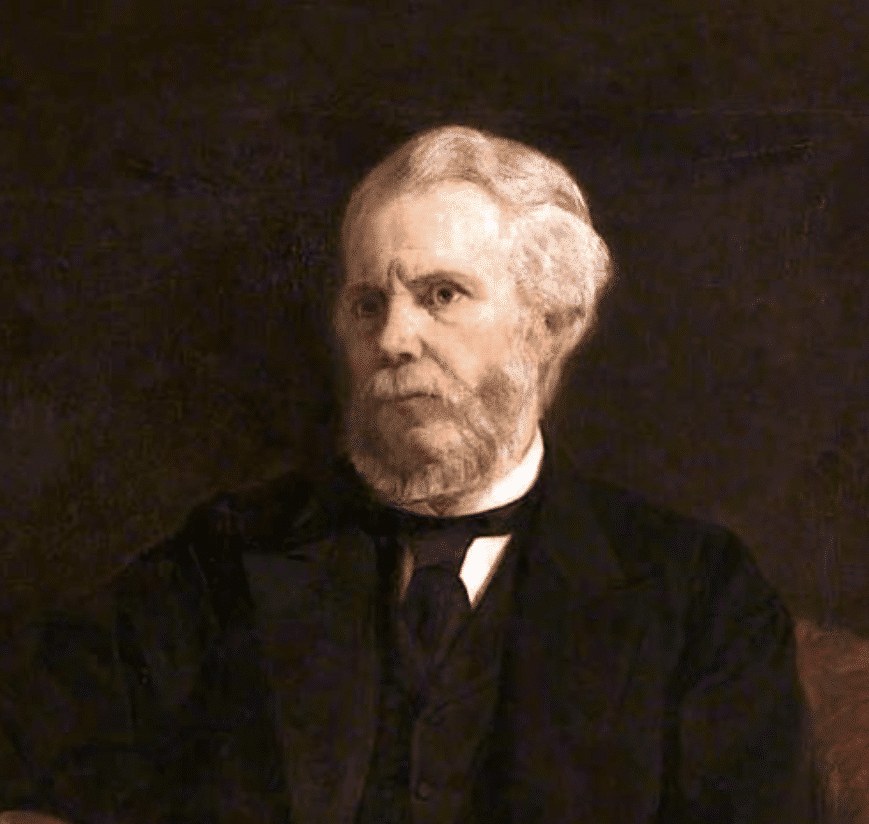
James Fairclough, the builder (1806-1877)

Victoria Building, King Street in 1877 built by James Fairclough
By Wigan Local History and Heritage Society for the King Street Heritage Action Zone
James Fairclough was born in 1806 and became an indentured joiner/carpenter. In 1841 he was living with his widowed mother in Rodney Street, Wigan along with his wife Alice and their four children. He had sound business acumen and by 1851 he had set up his own business in King Street and employed five apprentices and 36 men.
The business consisted of a building company and an adjacent Sawmill. Over time he became a prolific builder winning many contracts such as:-
- 1851 – Theatre Royal (King Street)
- 1853 – Public Hall (King Street)
- 1855 – 1857 – Ince Cemetery Chapels
- 1855 – 1857 – Wigan Workhouse (Frog Lane)
- 1856 – St. Patrick’s School
- 1862 – Christ Church (Ince Parish Church)
- 1868 – The Old Town Hall (Borough Courts & Offices) – King Street
By 1861 James was employing 68 men and six boys, considered to be a major building company in the Wigan area.
In the late 1850’s, James and his partner son Charles Horace built themselves a prestigious family house “The Hollies” on Wigan Lane, adjacent to the Plantation Gates.
He was elected to the Town Council in 1850 and continued to represent the All Saints’ Ward for 12 years. In 1862 he was chosen as an Alderman of the borough from which office he retired in 1865, after successfully tendering for the erection of the Borough Courts. He also became a Justice of the Peace and whilst his health permitted he took his share in all the important duties of the bench.
Due to his failing health in 1876, James transferred sole ownership of Fairclough & Son to his son, Charles Horace.
After James’s death in 1877 his family home “The Hollies” was sold to Sir Thomas Ratcliffe Ellis. This later became the prep school for Notre Dame Convent in Standishgate.
Charles Horace Fairclough
In 1868, Charles married Mary Cecilia, the eldest daughter of John Taylor the colliery owner, at Strickland House, Standish. He eventually relinquished the building business and became chairman and a major shareholder in the Oldfield Brewery Company as well as the proprietor of Worthington Hall Collieries in Standish.
From the 1899 Council Minutes, there appears to be an exchange of land between Charles Horace, John Worswick, and the Council in Library Street and other locations in the immediate area.
Charles Horace was a resident of Southport for many years and died in 1900 at the Clarence Hotel, Llandudno, in his will he left £36,489.
Read more Wigan history articles below…

New Members, click on the link below and complete our simple online form to become a member:
Please click here to join now
Existing members, please click on the link below and complete our renewal form:
Please click here to renew your membership