Dr. Robert Prosser White (1855-1934)
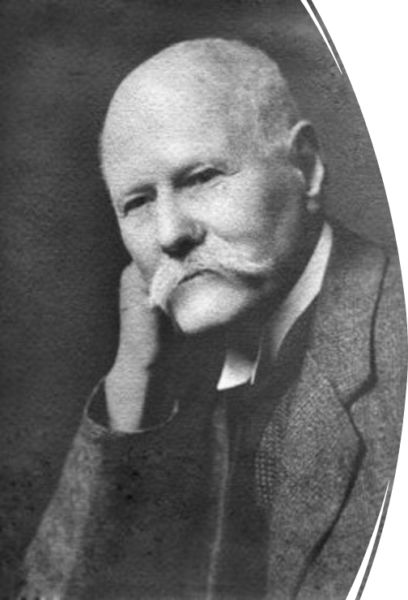
Dr. Robert Prosser White, “PROSSER”
By Wigan Local History and Heritage Society for the King Street Heritage Project
Many of the following references are taken from Dr. Prosser White’s obituary in the British Medical Journal (BMJ), 13 January 1934 by W.E Cooke. It states that “Wigan had lost one of her most distinguished sons and the medical professionals an outstanding personality”.
Robert Prosser White an eminent medical doctor who, as a child, lived in King Street. On the 1861 census, age six, he is living with his father James White, also a doctor.
Dr. James White, J.P was born in Minshull, Cheshire on Christmas Day in 1823 and died in January 1897 having spent 50 years as a surgeon in Wigan. He spent time as surgeon at the Dispensary. In 1892 he moved from King Street to 139 Wigan Lane the house on the corner with New Lodge, which is still standing. This was much closer to the Royal Albert and Edward Infirmary where he worked on its opening in 1873. A commemorative plaque to James White, his wife Mary and their daughter, Florence, can be seen in St. Michael and All Angel’s church, Swinley erected by their son.
Robert was the eldest child of James White and his wife, Mary Hutchings Prosser. He was educated at the Royal Grammar School in Clitheroe, Edinburgh University and University College London. He graduated with a Doctor of Medicine (M.D.) in 1880.
In 1885 he was elected honorary physician to Royal Albert and Edward Infirmary, later becoming a lifelong Vice President.

He founded the dermatology department at the hospital and gave the first X-ray and Finsen light apparatus to the hospital. After his retirement he was elected honorary consulting dermatologist and for many years prior to his death in 1934 he was the certifying factory surgeon for the Wigan area.
Amongst many other things he has been recognised for:
- International reputation as a specialist in industrial diseases, especially relating to their effects on the skin.
- Ex president of London Dermatological Society and Factory Surgeons Association.
- Author of numerous medical works, his principal work on ‘Occupational Affections of the Skin’ the 4th edition published in 1915, has been translated into every European language and there have also been several American editions. He was a member of the Permanent International Committee for the study of industrial diseases under the League of Nations in Geneva.
Those who knew ‘Prosser’ as he was affectionately known, welcomed by his friends realised the amount of work embodied in every article he wrote. His knowledge of both medicine and men with his unbounded energy and keenness in medicine left no time for the uninterested or slackers. His love of the chosen branch of medicine was almost equalled by his love of his hometown and its people.
Around 1890 he published a manual for Church Lad’s Brigade Medical Staff Corps and became medical officer and Surgeon Colonel of the Brigade and Editor of Brigade’s Medical Corps Manual, taking pains to ensure proper training of the youth of the area. He had an interest in the Wigan Mining and Technical College and founded a “French Travelling Scholarship” allowing Wigan students to spend three months in France or another continental country to study their special branch.
His artistic temperament included interests in poetry and music and this took a practical and beneficial form. He funded Wigan Parish Church Musical Fund to ensure an annual organ recital. In 1924 he founded the Medical Book Trust Fund at Wigan Public Library to buy books on original research, expensive textbooks and works in ancillary services.
In his younger days to preserve records of Wigan, he commissioned young artists to paint and make drawings of the many old buildings. He later donated a collection of 45 paintings, etchings and drawings illustrative of Wigan and surrounding districts to Wigan Free Public Library and these were placed on the walls of the Central newsroom.
He married Clarice Emma Le Rougetel from Guernsey in 1907 when he was 52. They had two children, Robert Le Rougetel White (1908–1979) who became a Doctor of Economics and a Royal Naval Volunteer as a temporary acting Sub Lieutenant between 1943-45.
Their second son, James Helier White (1912–1944), died while leading his men during the Normandy Landings on D-Day in June 1944. He was a Captain in the South Lancashire Regiment and 5th Battalion the East Yorkshire Regiment and is named on the Bayeux War Cemetery in France.
After a long career in medicine, Dr Prosser White died on 4 January 1934 and is buried with his mother and father at Lower Ince Cemetery. His obituary in the BMJ states “he was of fine character. Although breezy and cheerful, and going out of his way to help the underdog, his mind was always on the ultimate good that might accrue from his work”.
With thanks to Pat and Will Sharp, leads for “Who Built Wigan Churches?” project and members of the Wigan Local History and Heritage Society and Jim Meehan, also a member of Wigan Local History and Heritage Society, from his work on King Street Heritage Action Zone project.
SOURCES
Ancestry
Findmypast
Wigan Archives and Museum – Past Forward Issue Number 95, December 2023-March 2024
Read more Wigan history articles below…

New Members, click on the link below and complete our simple online form to become a member:
Please click here to join now
Existing members, please click on the link below and complete our renewal form:
Please click here to renew your membership