The former Wigan Savings Bank

The Former Wigan Savings Bank was in this building on King Street
By Wigan Local History and Heritage Society for the King Street Heritage Action Zone
Today, as you walk past 47 King Street, you’re not just looking at a former bank now serving as a solicitor’s office. You’re witnessing a piece of Wigan’s history, encapsulated in stone and mortar, echoing the stories of those who walked through its doors seeking assistance, security, and prosperity.
This building, with its rich architectural beauty and layered history, stands as a proud reminder of Wigan’s past, its community spirit, and its capacity for renewal and change.
It was constructed in 1891 by the architect H. Verity and is a striking example of the Italian Renaissance Palazzo style, exuding an air of grandeur and meticulous craftsmanship. The building’s façade is crafted from sandstone ashlar, and it showcases a myriad of architectural details that draw the eye and captivate the imagination. Its notable features include a triangular pediment poised above the entrance, which is graced by a Venetian window in the three-section format directly above it, offering a glimpse into the building’s elegant interior. The design intricacies extend to the roof and first-floor levels, adorned with balustrades that add to the building’s majestic profile. Corinthian columns, impart a sense of classical beauty and strength on the first floor, whilst the ground floor boasts rusticated blocks, where the unique textural contrast of vermiculated detailing – resembling worm tracks – alongside v-grooved rustication between the blocks, adds depth and character to the structure’s base.

Here is a glimpse of how it looks inside today, and it’s good to see that it’s retained some of its former grandeur, with its detailed ceiling plaster work, original wood and glass panels of the bank teller windows, and what look like original light fittings. Photograph by Sean Jenks.
Read More
The Wigan Savings Bank was established over 200 years ago, in 1821, first opening its doors in Standishgate
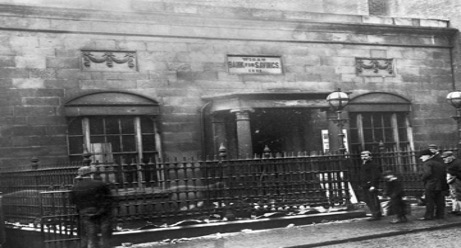
The Wigan Savings Bank was founded in July 1821 in Standishgate.
Prior to the building by H Verity in 1891, the site was occupied by the Wigan Dispensary founded in 1798. The word Dispensary used here does not quite have the same meaning as it does today. It signifies a place where general healthcare was provided or given out – dispensed to patients. Its aim was to provide some charitable medical assistance to the very poor of the town. It was financed by donations, church collections, bequests and annual subscriptions. Subscribers were able to recommend one patient at a time for treatment for every half-guinea subscribed. It was open twice a week with home treatment when necessary. One thousand patients per year were expected but this number was soon outstripped.
From 1801 the Dispensary had its building on this site in King Street until it was sold, but it maintained a presence in King Street by taking out a lease on rooms in Leader’s Building, due to a donation of £1,000 from Miss Amelia Gidlow.
In 1873 it amalgamated with Wigan Infirmary, which opened in that year.
A History of the Wigan Dispensary by Chris Heaven can be found via a link to Wigan Buildings Preservation Trust site: Link
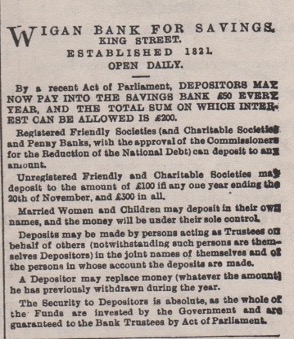
The Wigan Savings Bank was first set up in 1821 to encourage the working-class communities to save money. This was at a time when many people didn’t have much financial security. The founders, including Rev. Benjamin Powell, believed that by helping people to save, even in small amounts, they could protect themselves against future hardships such as illness or old age. The bank was there to promote the idea of thrift—a way of managing money that involved being careful and planning for the future.
By making it easier for ordinary people to put their money into a safe place, where it could earn interest and grow over time, the bank aimed to improve the overall well-being of individuals and families.
It particularly empowered women and children. In the 19th and early 20th centuries, financial independence for women was limited, and children’s financial affairs were typically managed by their parents. Recognising the importance of financial security for all, it allowed married women and children to open accounts in their own names. This was a significant move, as it gave women direct control over their finances at a time when their economic rights were otherwise restricted. Women could save for their own future and that of their children, contributing to their sense of independence. For children, having a savings account in their name taught them the value of money from a young age and encouraged the habit of saving.
This early financial education could have a lasting impact, instilling a sense of responsibility and planning for the future. By providing these services, the Wigan Savings Bank played a role in subtly shifting social norms around money and who had the right to manage it. It supported the idea that everyone, regardless of social class, gender or age, should have the opportunity to save and secure their own financial well-being.
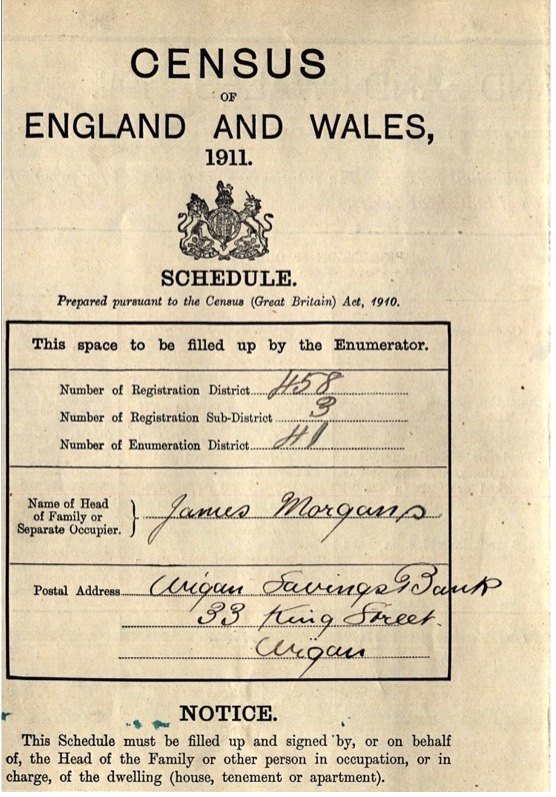

The 1911 Census gives us details of James Morgans, a Bank Sorter age 69, his wife Ellen age 70, and their niece Annie Latham a general domestic servant, age 24. It also tells us that James and Ellen have been married for 44 years.
The 1911 Census of England and Wales captures a snapshot of life during that time, revealing not only names and ages but also the intricate social structure and occupations of its residents. James Morgans, head of the household at 69 years of age, was listed as a “Banker” in his personal occupation, indicating a prestigious role. His wife, Ellen, at 70, shared the home, and alongside them was Annie Latham, a 24-year-old single woman whose role was listed as “Servant Domestic,” reflecting the common practice of middle-class families employing domestic help. The Morgans’ household provides a glimpse into the professional and domestic spheres that characterised early 20th-century Wigan. The census document itself is a window into the past, with its meticulously filled columns and careful handwriting. The 1911 census not only enumerates individuals but also immortalises the roles they played in their communities.
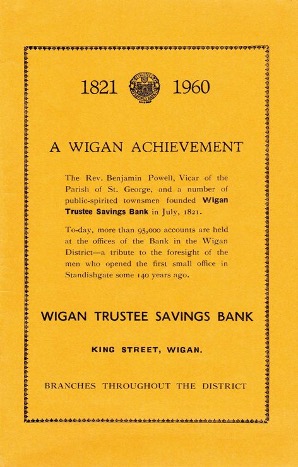
By 1960, this visionary institution had grown immensely, boasting more than 95,000 accounts—a clear indication of the trust and reliance placed in it by the residents of Wigan and its surrounding district. It’s a remarkable legacy of the initial office opened in Standishgate some 140 years prior, a testament to the enduring importance of community-driven financial services. The Wigan Trustee Savings Bank, as it became known, occupied a prominent location on King Street, serving as a hub of financial activity and community engagement. Its reach extended beyond a single location, with branches throughout the district, ensuring that the principle of thrift and the opportunity for financial security were accessible to all within the community.
This good practice of saving even spread into schools with many generations of children encouraged to save their pennies with the school bank system which was run by the Trustee Savings Bank. This network of branches and the impressive number of accounts reflect the bank’s success and the pivotal role it played in the lives of the local people. It stands as a tribute not only to the founders but also to the generations of Wigan residents who embraced the ethos of saving and propelled the bank into the heart of community life.
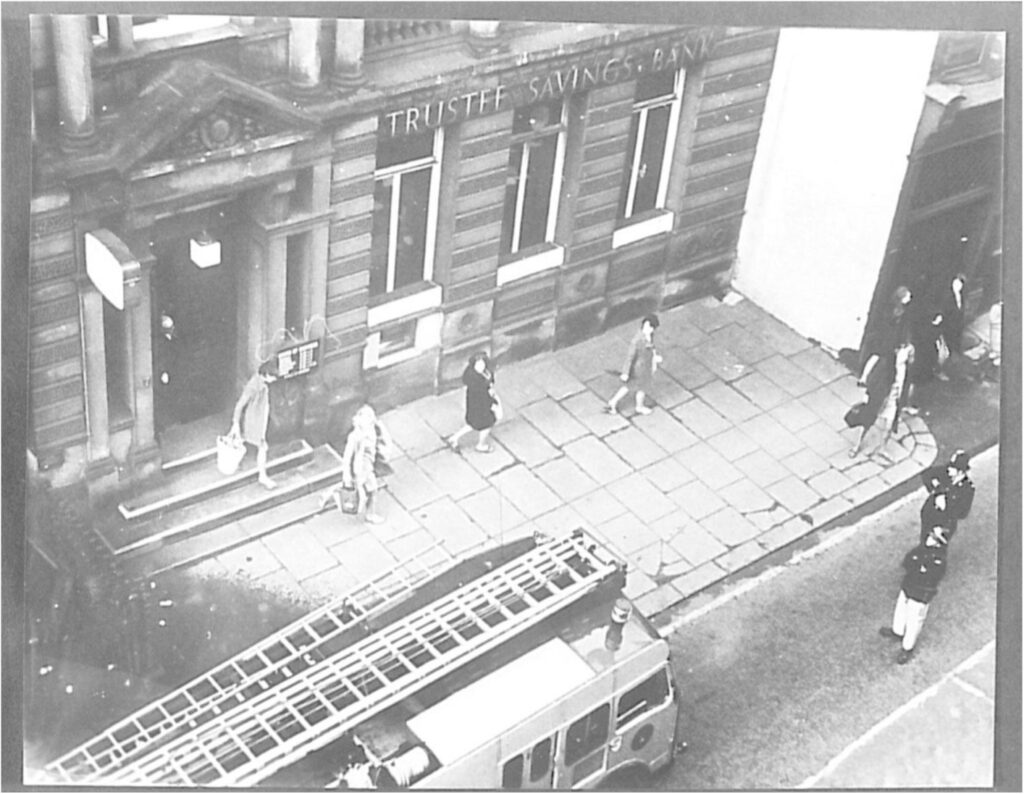
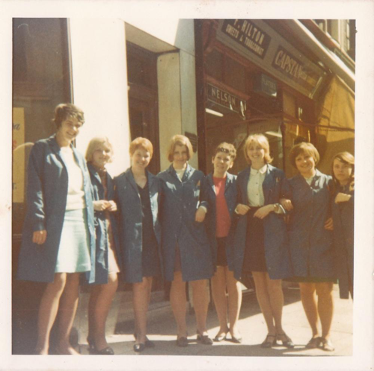
A photograph showing the staff in uniform from the Trustee Savings Bank in King Street. Photograph from Wigan World website
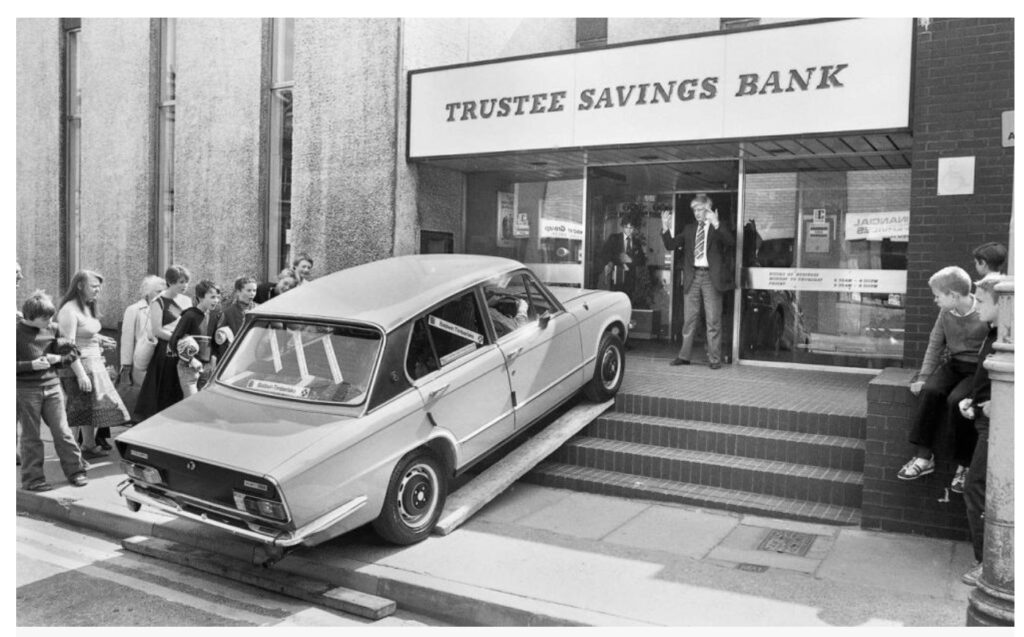
Photograph taken by Frank Orrell July 22nd 1980
The above photograph shows a car precariously parked on the steps outside the new building, it is believed the Triumph Dolomite car from Baldwin Timberlake was driven into the TSB in King Street for a publicity stunt.
The TBS moved from its old premises, now Platt and Fishwick Solicitors, in early 1974 to new premises next door. The bank was considered state of the art when it opened in the new premises.
In 1995 the TSB was merged with Lloyds Bank and moved its branch to new premises in Market Street.
sources: Historic England, Sean Jenks, Wigan World, British Newspaper Archives, Find My Past.
Read more Wigan history articles below…


New Members, click on the link below and complete our simple online form to become a member:
Please click here to join now
Existing members, please click on the link below and complete our renewal form:
Please click here to renew your membership